What to Know About Installing an Exhaust System on a Used Car
An exhaust system does much more than control the sound coming from your vehicle. It helps direct engine gases away from the passenger compartment, manages emissions, and plays a role in how efficiently the engine operates. When you are considering a used car, the condition of the exhaust system can therefore tell you a lot about the vehicle’s maintenance history and potential repair costs.
If an exhaust component is damaged, corroded, or improperly installed, fixing it may require more than simply replacing a muffler or exhaust pipe. Understanding the major components and knowing what to look for can help you make a more informed decision before purchasing a used vehicle.
What Does a Car Exhaust System Do?
The exhaust system carries gases produced during the combustion process away from the engine and toward the rear of the vehicle. Along the way, different components help control emissions, reduce noise, and direct the gases safely outside the vehicle.
Depending on the vehicle, the system may include exhaust manifolds, catalytic converters, oxygen sensors, exhaust pipes, resonators, mufflers, and exhaust hangers. The exact configuration varies by make, model, engine, and emissions requirements.
A problem with one component can sometimes affect other parts of the system. For example, an exhaust leak may create unusual sounds, while damaged mounting hardware can cause pipes or mufflers to move and contact other parts underneath the vehicle.
When Might an Exhaust System Need Replacement?
Exhaust components are exposed to road debris, moisture, road salt, heat, and temperature changes. Over time, these conditions can contribute to rust, cracks, holes, and weakened connections.
Common signs that an exhaust system may need attention include:
- A noticeably louder or deeper exhaust sound
- Rattling or vibrating noises underneath the vehicle
- Visible rust or holes in exhaust components
- A noticeable exhaust smell
- Loose or damaged exhaust hangers
- Reduced performance or unusual engine behavior
- A check engine light related to emissions components
Some problems are relatively straightforward to repair, while others can involve expensive components such as catalytic converters or emissions-related sensors.
That is why an exhaust problem should not automatically be treated as a reason to reject a used vehicle. Instead, the condition, severity, repair requirements, and expected cost should be considered together.
What Is Involved in Exhaust System Installation?
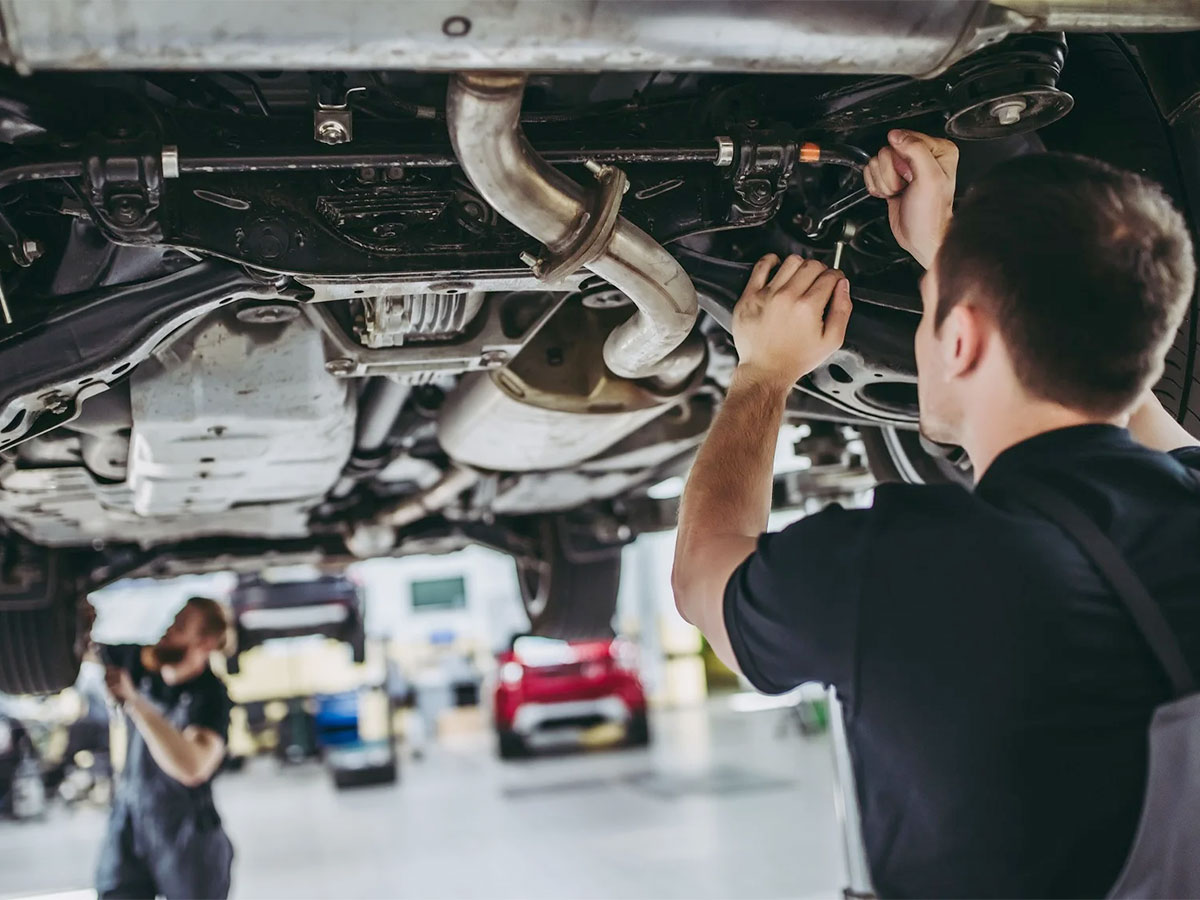
Replacing an exhaust system involves more than removing an old pipe and attaching a new one. The replacement components need to match the vehicle and be positioned correctly underneath it.
A typical replacement may involve removing damaged sections, inspecting connection points and mounting hardware, replacing worn gaskets or hangers, and securing the new components in the correct position.
The exhaust should have enough clearance from the vehicle’s frame, fuel system, heat-sensitive components, and other underbody parts. Incorrect positioning can lead to vibration, premature damage, excessive heat exposure, or new leaks.
For this reason, exhaust work can require specialized tools, adequate vehicle support, and knowledge of the particular vehicle. Anyone considering a DIY installation should understand the safety risks involved with working underneath a raised vehicle.
Should You Inspect the Exhaust Before Buying a Used Car?
Absolutely. An exhaust system is one of the areas worth examining during a used-vehicle evaluation.
A visual inspection can reveal obvious rust, dents, missing hardware, damaged hangers, or poorly repaired sections. However, not every exhaust problem is easy to identify simply by looking underneath the vehicle.
A car inspection can help you evaluate the vehicle more systematically before making a purchase. The goal is not simply to find problems, but to understand the overall condition of the vehicle and identify issues that could affect ownership costs.
What Should You Look for During an Exhaust Inspection?
When evaluating a used vehicle, pay attention to the condition of the exhaust system from the engine area through the rear of the vehicle.
Look for signs of corrosion, physical damage, loose components, or previous repairs. Listen for unusual rattling or excessive exhaust noise while the vehicle is running. It is also important to consider whether warning lights or other symptoms could be connected to the vehicle’s emissions system.
However, a buyer should avoid placing themselves underneath an improperly supported vehicle. If a more detailed examination is necessary, having the vehicle evaluated by an experienced professional is a safer approach.
A vehicle inspection can provide a broader assessment rather than focusing on the exhaust alone. This is particularly useful when you are evaluating an older vehicle where multiple systems may require attention.
What If the Seller Says the Exhaust Was Recently Replaced?
A recently replaced exhaust system may sound reassuring, but it is still worth verifying what was actually replaced.
Ask whether the entire system was changed or whether only one component, such as the muffler or a section of pipe, was replaced. If possible, ask for receipts or service records. You can also look for signs of newer components alongside older, heavily corroded parts.
The quality of the installation matters as well. New parts can still cause problems if they are incorrectly positioned, poorly secured, or connected using damaged hardware.
This is one reason a professional assessment can be valuable when purchasing a used vehicle.
Exhaust Condition Can Affect Your Buying Decision
A vehicle with an exhaust issue is not necessarily a bad purchase. The more important question is whether you understand the problem and its likely implications before agreeing to a price.
For example, a minor exhaust hanger replacement is very different from discovering a damaged catalytic converter or extensive corrosion throughout the exhaust system. The age and condition of the rest of the vehicle should also be considered.
If you are comparing several used vehicles, having each candidate evaluated can help you identify which vehicles deserve closer consideration. Your Virtual Mechanic provides expert guidance to help buyers evaluate used cars and trucks before committing to a purchase.
Consider a Pre-Purchase Inspection Before You Buy
An exhaust system is only one part of a used vehicle. A car may look clean and sound good during a short test drive while still having mechanical or maintenance concerns that are not immediately obvious.
A pre-purchase auto inspection can help you look beyond the vehicle’s appearance and advertised condition. Evaluating multiple areas before purchasing can give you a clearer understanding of what you may be taking on as the next owner.
This is especially useful when buying from a private seller, purchasing an older vehicle, or considering a car with limited maintenance records.
When an On-Site Mechanic May Be Useful
Sometimes a vehicle needs more than general advice. If a physical examination is appropriate, an on-site mechanic can provide another option for assessing the vehicle where it is located.
Whether you are considering a sedan, SUV, pickup truck, or another type of vehicle, understanding its condition before purchase can help you avoid unexpected repair expenses.
Your Virtual Mechanic connects vehicle buyers with automotive professionals who can provide guidance during the evaluation process. Instead of relying entirely on the seller’s description, you can approach the purchase with more information about the vehicle’s condition.
Final Thoughts
An exhaust system is an important part of any vehicle, and its condition should not be overlooked when evaluating a used car. Rust, leaks, damaged components, poor repairs, and mounting problems can all lead to additional expenses after purchase.
Rather than focusing only on whether an exhaust system needs repair, consider the bigger picture: what is wrong, how serious is the issue, what other components may be affected, and how does the condition fit into the vehicle’s overall value?
A thorough inspection before purchasing can help answer these questions and give you useful information before you commit to the vehicle. With professional guidance from Your Virtual Mechanic, used-car buyers can make the evaluation process more informed and approach negotiations with a better understanding of the vehicle they are considering.